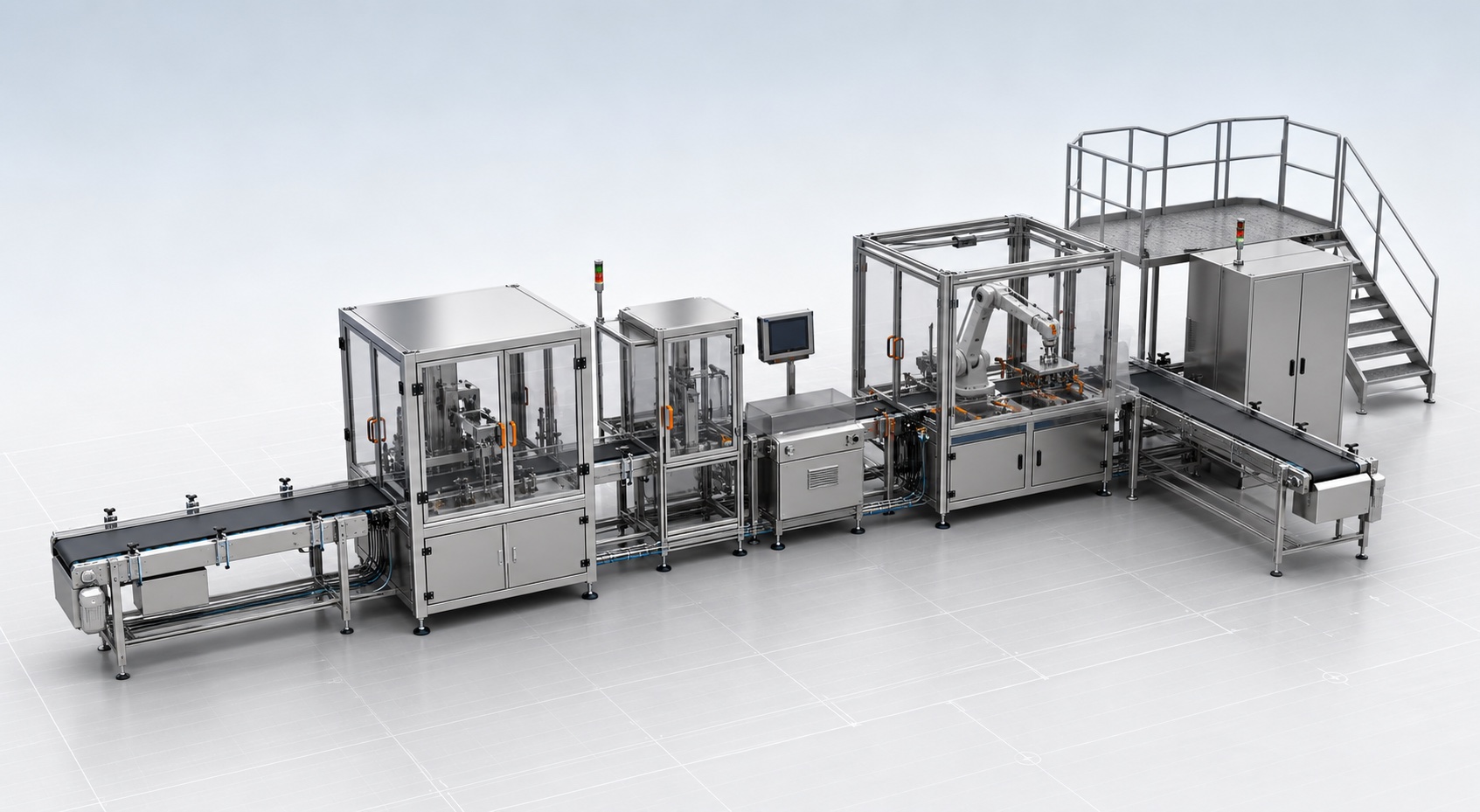
Industrial equipment configuration begins with a governed catalogue and a defined application. The workflow can translate duty, throughput, materials, utilities, environment and site inputs into permitted product families, capacities, modules, motors, controls, guarding, accessories and services while preserving why each decision was made.
A modular 3D view makes the result understandable. Users can review machine arrangement, connected modules, overall footprint, access doors, platforms and service-clearance zones. That visual context supports sales and layout review, but does not independently verify process performance, structural loads, electrical design, functional safety, foundations or regulatory compliance.
Visual CPQ connects the accepted equipment configuration to account prices, discounts, freight, installation, commissioning, proposals, revisions and approvals. Manufacturers can govern one product model while sales offices, distributors, dealers and customers receive the catalogues, terms, languages and documents intended for them.
Configure-to-order options can follow accepted rules directly. Engineer-to-order exceptions can be identified early and routed with the exact input, preliminary layout and commercial context that engineering needs. Specialist calculations or CAD automation should only be presented as included when their methods, source data and acceptance tests are defined.